Manufacturers are moving rapidly from forecasting demand to sensing it in real time. Nowhere is this shift more visible than in spare parts, where connected equipment, bin sensors, and AI-driven rules are beginning to reorder autonomously. What started as basic vendor-managed inventory is evolving into programmatic commerce: machines triggering transactions on their own, within guardrails set by humans.
Author Copperberg Editorial Team | *This article was developed using a combination of human expertise and AI-assisted writing. The concept, structure, and editorial direction were defined by our team, while elements of the text were generated with the support of advanced language tools. All content has been reviewed, refined, and approved by humans to ensure accuracy, clarity, and relevance.
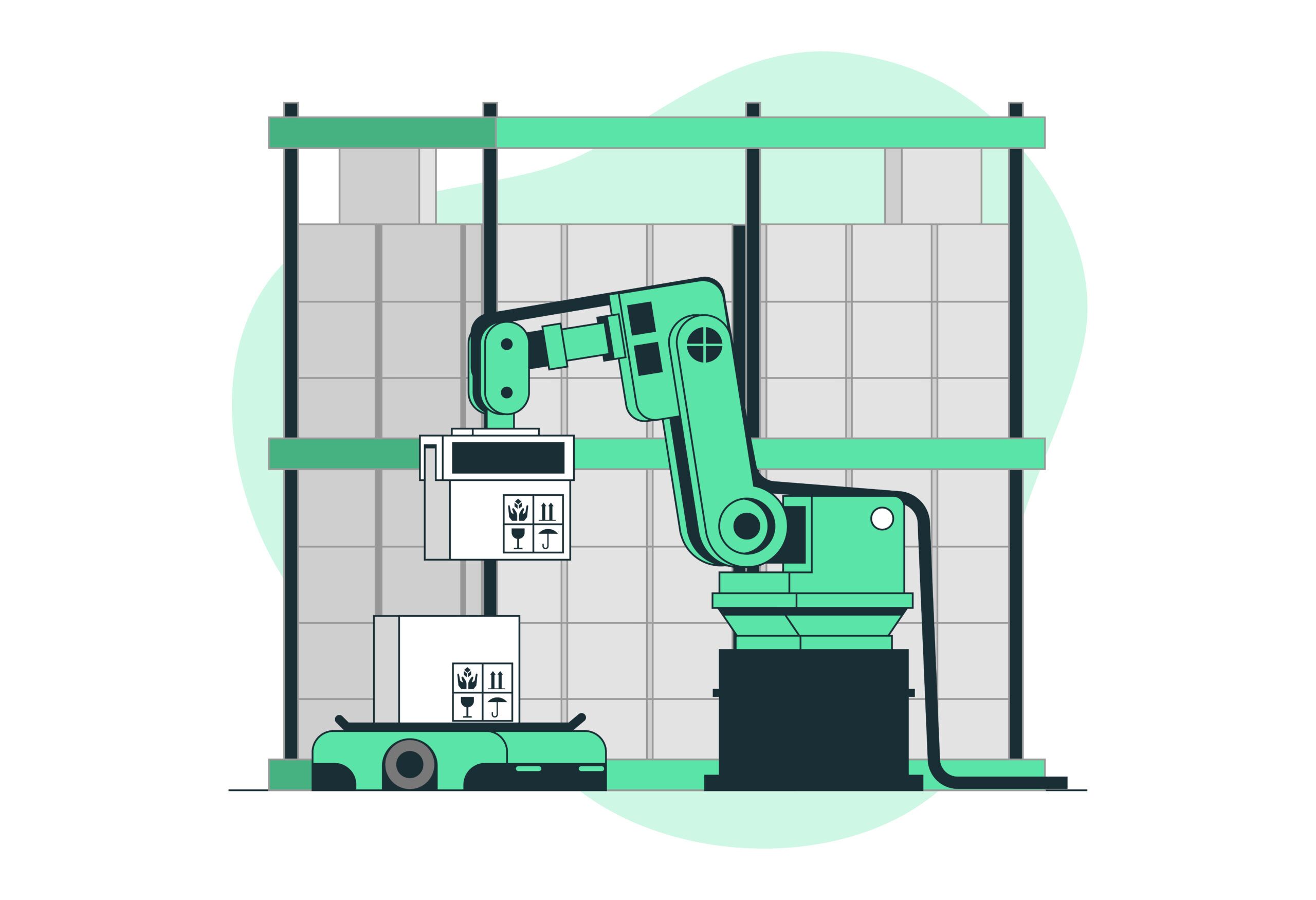
Photo: Magnific
For industrial and aftermarket leaders, the question is no longer whether autonomous reordering is technically feasible. The strategic challenge is how to design, govern, and monetize these systems so they improve availability and working capital, without surrendering control of customer relationships, pricing, and risk.
Three design decisions will largely determine who wins.
From Safety Stock to Self-Replenishing Systems
The traditional logic of spare parts planning has been built on averages: mean time between failures, static min-max levels, and safety stock calculated once or twice a year. Programmatic commerce dismantles that paradigm by tying replenishment directly to live signals from the field.
IoT-enabled equipment, edge devices, and stock sensors now provide a continuous view of asset health and local inventory. When combined with historical failure patterns and usage profiles, these data streams can trigger automated reorders long before a maintenance technician logs a ticket. McKinsey has estimated that advanced analytics in spare parts can cut inventory by 20–30% while improving service levels. Programmatic commerce operationalizes this potential by turning insight into automatic action.
The trigger design is pivotal. Progressive organisations are moving beyond simple stock thresholds to layered logics such as:
- Condition-based triggers: vibration anomalies, temperature deviations, or pressure loss automatically generate orders for at-risk components.
- Usage-based thresholds: cumulative operating hours or cycles push high-wear parts into replenishment queues before predicted end-of-life.
- Multivariate risk scores: AI models combine sensor data, spare part criticality, lead times, and supplier reliability to determine whether to reorder now, wait, or suggest a service visit first.
The strategic implication is clear: parts planning becomes deeply embedded in asset and service strategies. Decisions about which components are monitored, which can be ordered autonomously, and which remain under manual control are no longer purely operational. They define the economics of uptime guarantees, performance-based contracts, and premium service tiers.
Executives need to treat trigger design as a portfolio decision, not a tooling question. High-criticality, high-consequence parts may warrant conservative automation with redundant approvals, while consumables and low-value spares can move fast to full autonomy, especially at remote or customer-operated sites.
Balancing Machine Logic with Human Governance
As ordering shifts from planners and buyers to algorithms and devices, the governance question becomes central: who sets the rules, and how are they monitored?
Early adopters are discovering that “fully automated” is seldom the right starting point. Instead, they are phasing in autonomy through three levels of control:
- Advisory: systems recommend orders based on triggers, but planners confirm manually. This allows validation of models and thresholds against real-life behavior and customer expectations.
- Guardrailed autonomy: within defined parameters—such as maximum line value, strategic parts list, or customer contract type—the system orders automatically. Anything outside the envelope is escalated.
- Dynamic governance: over time, performance data is used to tighten or loosen rules. Consistently accurate triggers may gain broader autonomy, while those producing false positives revert to advisory mode.
The risk is not only over-ordering or stock-outs. Poorly governed automation can drive unintended commercial outcomes: discount leakage through always-on reordering, erosion of negotiating leverage with strategic suppliers, or unprofitable commitments embedded in long-term service contracts.
Deloitte has highlighted that AI and automation deliver the highest value when embedded in strong control frameworks that define accountability, exception handling, and performance metrics. For programmatic commerce in spare parts, this means:
- Clear ownership: who is responsible for trigger logic—the service organisation, supply chain, or digital/IoT team?
- Transparent rules: commercial, legal, and risk functions must understand what the system is permitted to purchase, from whom, and under which terms.
- Continuous audit: logs of autonomous orders, overrides, and exceptions need regular review to identify systemic issues and refine models.
What becomes increasingly evident is that autonomous reordering is as much an organisational transformation as a technical one. Leadership must align incentives so planners, service managers, and sales teams trust and support the logic, rather than bypassing it with manual workarounds that erode both efficiency and insight.
Redefining Availability, Cost Control, and Revenue Models
When machines reorder parts, the traditional trade-off between availability and inventory cost starts to shift. Instead of holding broad safety stock “just in case,” programmatic commerce enables a more surgical approach: high availability where it matters most, funded by precision reductions elsewhere.
In practice, organisations piloting autonomous replenishment report three categories of impact:
- Availability: uptime can be improved not only through faster reordering, but by moving decision-making closer to the asset. A connected component triggering its own order days before failure removes multiple human handoffs and approval delays. For customers on uptime guarantees or penalties, this changes the economics of performance-based contracts.
- Cost control: inventory reductions become more targeted. Rather than a blunt percentage cut across the portfolio, analytics identify which items can safely run lean under automated replenishment and which require buffer stock due to supply risk or long lead times. Working capital is redeployed rather than indiscriminately reduced.
- Revenue and retention: programmatic commerce creates a persistent digital connection between OEM and installed base. For manufacturers pursuing servitization, this connection enables subscription-based replenishment, bundled uptime contracts, or “parts-as-a-service” propositions tied to actual usage and risk.
The commercial implications run deeper than OPEX savings. If a customer’s internal systems or third-party distributors control the triggers, OEMs risk being pushed out of the transaction stream. Conversely, when OEMs provide the sensing, analytics, and autonomous ordering layer, they increasingly become the orchestrator of aftermarket flows.
Strategic questions for executives include:
- Whose platform wins? Will your parts be reordered by your own rules engine, a distributor’s portal, or the customer’s internal procurement bots?
- How are pricing and margins protected when orders no longer pass through traditional sales channels?
- Can programmatic commerce support differentiated service tiers—for example, guaranteed fill rates and emergency logistics baked into premium contracts?
Programmatic commerce is not just an efficiency play; it is a structural shift in who captures data, controls interaction frequency, and ultimately owns the aftermarket profit pool.
Exposing and Managing New Risks
The move towards autonomous reordering surfaces risks that are less visible in traditional, human-driven processes. These are not reasons to avoid programmatic commerce, but they demand deliberate mitigation strategies.
First, algorithmic brittleness. Models trained on historical patterns can overreact to unusual but explainable events—such as a one-off surge in usage during a shutdown, or a temporary disruption at a single site—and translate these into excessive orders. Without appropriate dampening and exception rules, small anomalies can cascade into significant inventory distortions.
Second, dependency concentration. As more orders flow automatically through a limited set of preferred suppliers and logistics partners, supply chain resilience can be reduced. A local disruption or quality issue at a single vendor may impact far more assets and customers than before, because the system has been optimized around that vendor’s historical performance.
Third, customer trust and autonomy. Some customers may resist the idea that the OEM or service provider is effectively deciding when and what to buy on their behalf. Concerns around data privacy, perceived lock-in, and loss of local control can quickly erode adoption if not managed transparently.
Mitigation requires a blend of design and communication:
- Build in “circuit breakers”: caps on daily value, volume, or deviation from historical norms trigger human review before execution.
- Preserve controlled redundancy: for critical parts, maintain secondary sourcing options and contingency logistics paths, even if they appear suboptimal in short-term cost models.
- Offer configurable control levels: give customers the choice between advisory, semi-autonomous, and fully autonomous modes, along with clear visibility of rules and benefits at each level.
Finally, cyber and data integrity risks cannot be ignored. If devices that can place orders are compromised or manipulated, the impact moves from data leakage to direct financial loss and operational disruption. Autonomous replenishment must therefore be integrated into broader cybersecurity and OT security frameworks, with robust authentication, encryption, and anomaly detection.
Conclusion
Programmatic commerce in spare parts marks a turning point for industrial and aftermarket leaders. As connected assets, sensors, and AI rules engines begin to reorder autonomously, spare parts management shifts from planning around forecasts to orchestrating real-time, machine-initiated demand.
The winners will not simply deploy new tools. They will design intelligent trigger portfolios, embed machine logic within robust governance, and rethink commercial models to turn autonomous reordering into a source of differentiated uptime, lower working capital, and stickier customer relationships.
The strategic question is no longer whether machines will become major “customers” in aftermarket channels. It is whether manufacturers and service organisations are prepared to shape the rules of engagement—before someone else’s platform does it for them.
About Copperberg AB
Founded in 2009, Copperberg AB is a European leader in industrial thought leadership, creating platforms where manufacturers and service leaders share best practices, insights, and strategies for transformation. With a strong focus on servitization, customer value, sustainability, and business innovation across mainly aftermarket, field service, spare parts, pricing, and B2B e-commerce, Copperberg delivers research, executive events, and digital content that inspire action and measurable business impact.
Copperberg engages a community reach of 50,000+ executives across the European service, aftermarket, and manufacturing ecosystem — making it the most influential industrial leadership network in the region.