AI has become the default answer to almost every field service question. Predictive maintenance, digital twins, augmented reality, automated dispatch, the investment focus is overwhelmingly in back-office systems and central intelligence.
Author Copperberg Editorial Team | *This article was developed using a combination of human expertise and AI-assisted writing. The concept, structure, and editorial direction were defined by our team, while elements of the text were generated with the support of advanced language tools. All content has been reviewed, refined, and approved by humans to ensure accuracy, clarity, and relevance.
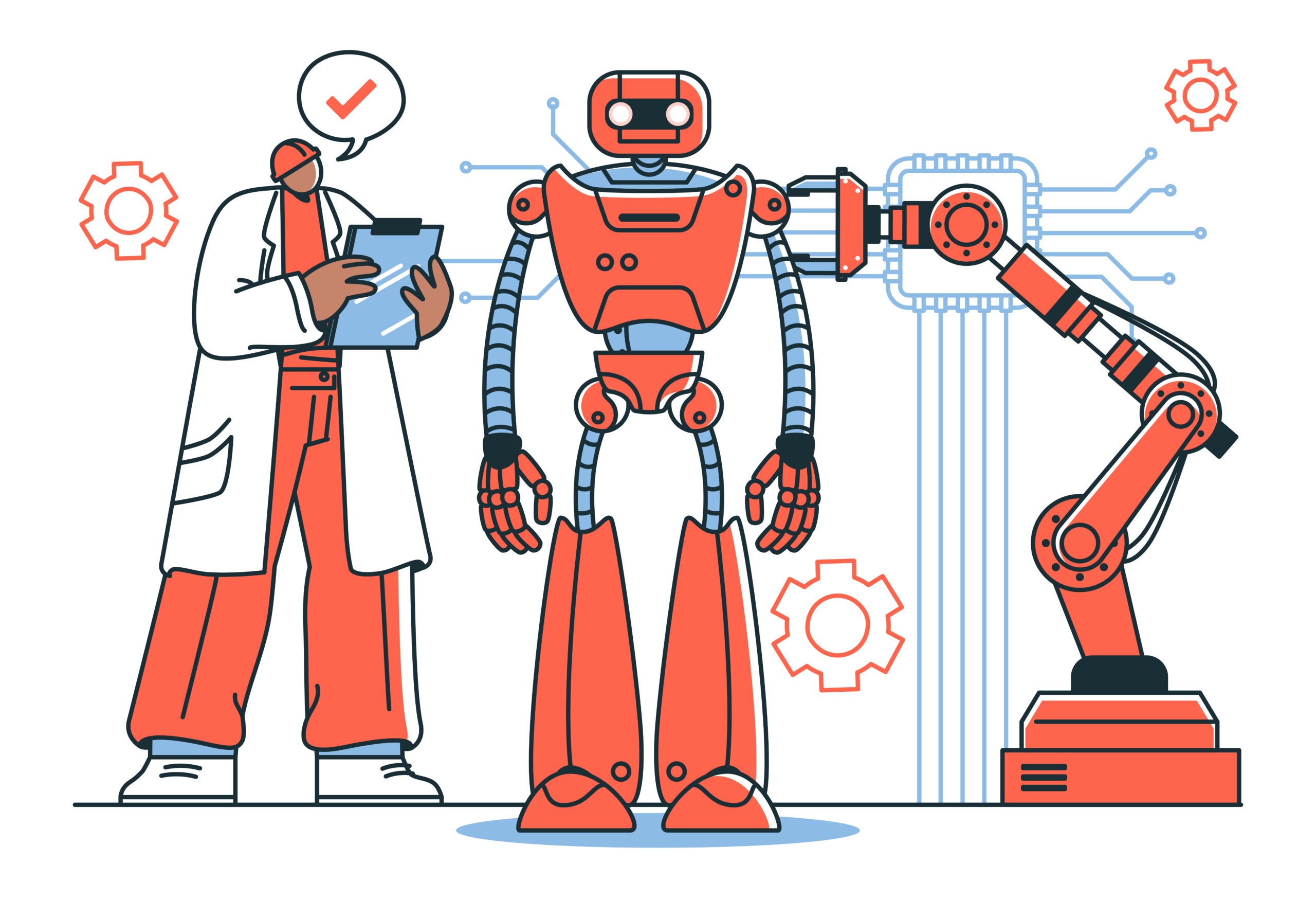
Photo: Magnific
But while service leaders feed algorithms with historical data and system logs, a critical element is often missing from the design: the technician.
The technician is increasingly treated as a cost line, a constraint, or simply a data source to be mined. Yet this is precisely where AI and broader digital initiatives can have the most immediate and measurable impact: at the point where a person, an asset, and a customer meet.
A recurring theme in forward-looking service organisations is a shift away from AI in the background toward AI at the edge, embedded into the technician’s workflow before, during, and after the job. The implications reach far beyond productivity. They touch execution quality, safety, customer trust, and even how products are designed.
At Field Service Forum 2026 – Power of 50, Liam OhUiginn, senior leader at TrueContext, discussed how to design AI and mobile solutions that genuinely augment technicians rather than constrain them.
From Back-Office Intelligence to Frontline Execution
Most AI strategies in service start in the back office: forecasting models, schedule optimisation, asset health scoring, and service analytics. These are important, but they assume the field is a reliable and rich data source. In many organisations, it is not.
Technicians are still asked to complete generic PDF reports, navigate multiple systems, and re-enter the same information in different formats. Data is late, inconsistent, and often incomplete. When that happens, even the best AI model is working from a partial view.
A different approach starts from the field and works backward.
Instead of asking “What can AI tell us?”, the more productive question is “What does the technician need at the point of execution and what data do we need them to naturally generate in the process?”
This leads to several practical design decisions:
- Build one consistent mobile experience that sits on top of existing systems instead of asking technicians to jump between them.
- Use no-code or low-code tools so that operational experts can iterate workflows quickly in response to real field feedback, rather than waiting on IT releases.
- Treat the mobile app as the octopus that pulls data from multiple systems, presents only what is relevant to the specific asset and job, and then returns structured data to the right destinations.
In this model, AI does not live only on a central platform. It is embedded into the technician’s daily workflow in a very practical way: pre-visit context, in-the-moment guidance, and post-visit documentation. The back office still benefits; the difference is that the flow of value is two-way.
Before the Job: Context as a Performance Multiplier
Preparation is where many field service organisations quietly lose efficiency. Technicians arrive on site without full asset history, recent observations, contract commitments, or known failure patterns. They spend time reconstructing basic context that could have been provided in advance.
An emerging priority is to deliver that context in the format technicians actually use. For example, a short, AI-generated site podcast delivered on the way to the job. Instead of reading through multiple systems, a technician listens to a four-minute audio briefing that summarises:
- Contract and SLA details;
- Asset history and recent interventions;
- Recurring fault codes or patterns;
- Open recommendations or pending customer issues.
This goes beyond convenience. It compresses the learning curve so that even less-experienced technicians can arrive with the practical awareness of a veteran. When combined with shift handover data, including photos and partial work from the previous visit, it also reduces the risk of missteps when jobs span multiple shifts or technicians.
In high-risk environments, this is not just about efficiency but safety. On assets such as offshore oil and gas platforms or large industrial sites, clear digital handover between shifts can help prevent incidents linked to miscommunication or missing information.
The common thread is simple: the more specific and accessible the context before a job, the higher the execution quality during the job.
During the Job: Designing Workflows That Guide, Not Block
The “during” phase is where the tension between control and flexibility becomes most visible. Organisations want compliance, complete data, and consistent procedures. Technicians want to solve the problem without being slowed down by screens and checkboxes.
When digital workflows are poorly designed, technicians respond in predictable ways: workarounds, minimal data entry, and rushed completion just to close out a job. The result is weak data and frustrated staff.
Several principles are emerging for AI-augmented workflows that support, rather than hinder, technicians:
- Only show what is relevant
Conditional logic can restrict questions and instructions to what applies to the exact equipment, configuration, and situation. In one medical technology deployment, hundreds of legacy checklists in multiple languages were rationalised into dynamic workflows that embedded manuals, test grids, and measurement steps directly in context. Technicians no longer had to search separate documents or systems mid-job.
- Support natural input methods
Technicians working on complex assets often have limited time and attention for data entry. Voice-to-form input is one way to reduce friction. Automatic annotation of photos (for example, identifying corrosion or damage) is another.
- Guard against logic dead ends
Over-engineered workflows can trap users when a real situation does not match a predefined path. Robust user acceptance testing with real technicians and smart version control are essential. A no-code designer that prevents deployment of logically broken workflows is not a nice-to-have; it is a reliability requirement.
- Respect offline reality
Connectivity is still inconsistent in many industrial environments. Field apps must function fully offline and synchronise later, not fail when the signal drops. This is especially critical on remote sites, offshore assets, or in dense industrial facilities.
When these principles are applied, AI at the edge changes execution in real time. Technicians see the next best step, the relevant asset history, the correct compliance sequence, and the live parts information without interrupting the flow of work. The organisation, in turn, receives clean, time-stamped, structured data suitable for analytics and AI.
After the Job: From Static PDFs to Service Intelligence
For many manufacturers and service providers, the job still ends with a PDF: a report emailed to the customer, sometimes printed and stored. It fulfils a contractual requirement but does little else.
Yet the after phase may be where the technician’s pride and insight are most visible and most underused.
Several shifts are underway:
- Richer data capture: High-quality photos, before/after comparisons, and structured measurements create a more complete view of asset condition over time. This is especially valuable across large install bases with millions of devices, where patterns only emerge at scale.
- Customer-facing clarity: Instead of a static PDF alone, some organisations are building customer portals that show reports, photos, trends, and asset performance history in a more interactive form. The technician’s work is not just documented but made visible in a way that reinforces trust.
- Feedback to design and operations: Once field data is properly structured, it can be shared with design, manufacturing, and product management teams. Questions such as “How do we make this easier to service?” and “Where are the recurring failures?” could finally be answered with evidence.
This closes a loop that is often missing. The job outcome does not just disappear into a customer email; it becomes an input into better workflows, better products, and more accurate predictive models.
The Human Edge of AI: Trust, Pride, and Tacit Knowledge
Behind all the technology choices sits a more human question: what happens to the technician’s judgment and creativity when so much is system-guided?
There is a legitimate concern that over-structured workflows might deskill the role or make technicians overly dependent on digital prompts. The more systems they rely on, the more disruptive it will be if something fails or a situation falls outside predefined scenarios.
The answer is not to avoid structure, but to design with respect for human expertise:
- Make room for free-form observations alongside structured fields, so technicians can capture the quirks and finicky behaviours of specific assets that only experience reveals.
- Use AI to surface patterns and context, not to replace decisions. The goal is to arrive on site as prepared as possible, not to script every move.
- Treat technicians as co-designers of workflows. Their pride in their craft is a powerful asset; when they see that their feedback directly influences app design, adoption and data quality improve.
Trust flows in multiple directions. Customers trust technicians who clearly understand their assets and can show evidence of work done. Technicians trust tools that help them succeed rather than slow them down. Leaders trust data that is consistent and timely enough to drive real decisions.
When AI is designed around the technician, these forms of trust reinforce each other. When it is designed around systems alone, they erode.
Conclusion
AI in field service is often discussed in terms of models, platforms, and roadmaps. The more telling question is where intelligence is applied.
Treat AI primarily as a back-office capability, and you may improve planning and reporting while leaving the hardest part, execution in the field, largely unchanged.
Design AI and mobile experiences around the technician, and a different picture appears: better first-time fix, richer data, safer operations, clearer customer communication, and a faster feedback loop into design and operations.
The edge of your service organisation is not a device or a gateway. It is the human being standing in front of the asset. That is where AI can have the greatest impact, if you start there.
About Copperberg AB
Founded in 2009, Copperberg AB is a European leader in industrial thought leadership, creating platforms where manufacturers and service leaders share best practices, insights, and strategies for transformation. With a strong focus on servitization, customer value, sustainability, and business innovation across mainly aftermarket, field service, spare parts, pricing, and B2B e-commerce, Copperberg delivers research, executive events, and digital content that inspire action and measurable business impact.
Copperberg engages a community reach of 50,000+ executives across the European service, aftermarket, and manufacturing ecosystem — making it the most influential industrial leadership network in the region.