Spare parts warehousing has moved from the periphery of manufacturing and aftermarket strategies to the center of competitiveness. Servitization, uptime guarantees, and performance-based contracts have made parts availability and delivery speed core elements of the value proposition. At the same time, labor scarcity, rising logistics costs, and mounting customer expectations are challenging traditional, labor-intensive warehouse models.
Author Copperberg Editorial Team | *This article was developed using a combination of human expertise and AI-assisted writing. The concept, structure, and editorial direction were defined by our team, while elements of the text were generated with the support of advanced language tools. All content has been reviewed, refined, and approved by humans to ensure accuracy, clarity, and relevance.
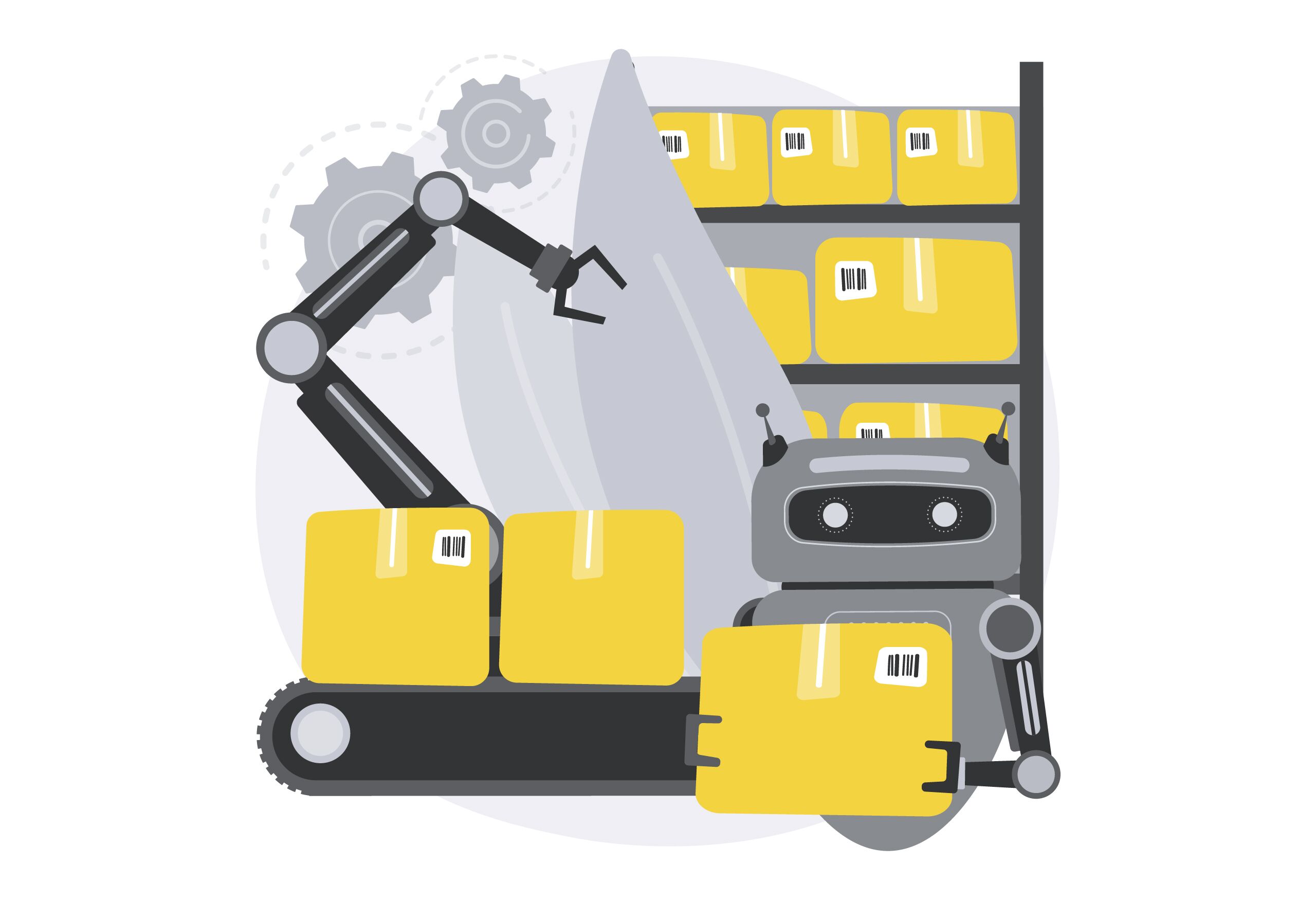
Photo: Magnific
Against this backdrop, autonomous mobile robots (AMRs), AI-powered sorting systems, and automated storage and retrieval systems (AS/RS) are no longer experimental technologies. They are becoming foundational infrastructure for leading industrial players. For executives responsible for service, aftermarket, and supply chain, the key question is not whether to adopt robotics in spare parts warehousing, but how to do so in a way that delivers structural advantages rather than isolated efficiency gains.
What becomes clear across leading adopters is that warehouse robotics is not just an operational upgrade. It is a strategic lever that reshapes inventory strategy, service performance, cost structure, and even business models.
From Manual Warehouses to Robotic Networks
Traditional spare parts warehouses were designed around human pickers, static storage layouts, and paper or basic WMS-driven workflows. This model suffers from several structural limitations:
- High dependency on variable, increasingly scarce labor
- Long walking distances and non-value-adding handling
- High susceptibility to picking and shipping errors
- Limited real-time visibility into micro-level operations
Robotics changes this paradigm by turning the warehouse into a digitally orchestrated, sensor-rich environment. AMRs handle transport and replenishment tasks; shuttle-based or vertical lift AS/RS systems densify storage and bring goods to the operator; AI-enabled vision and sorting systems accelerate receiving, returns processing, and outbound sorting; and robotic arms progressively take over repetitive picking of standard-form parts.
This shift aligns with broader industry moves toward smart, connected operations. McKinsey has highlighted that companies implementing advanced automation and analytics in warehousing can improve productivity by 20–30%, reduce errors by up to 70%, and significantly shorten order cycle times. For spare parts environments—where SKUs are numerous, demand is volatile, and service levels are business-critical—these gains translate directly into customer value and profitability.
Strategic Pathways to Adopting Robotics in Spare Parts Warehousing
The adoption question for manufacturers and aftermarket organizations is less about technology selection and more about strategic sequencing. Successful implementations typically follow three principles:
- Start from service strategy, not from the warehouse floor
The right automation design depends on the service promise. High-availability contracts, same-day delivery, or guaranteed uptime models require a very different intralogistics configuration than slower, cost-optimized MRO parts flows. Before investing in robotics, leading organizations clarify:
- Which SKUs are truly mission-critical and time-sensitive
- What service levels are required by segment and geography
- Where centralization vs. regional stocking makes sense
- How robotics could enable new offerings (e.g., tighter SLAs, premium services)
This approach ensures that robotics investments are not isolated CAPEX decisions but enablers of a differentiated aftermarket strategy.
- Focus on flow segmentation, not one-size-fits-all automation
Spare parts warehouses combine fast-moving consumables, bulky low-rotation components, returns, and repairable items in the same footprint. Attempting to automate everything in the same way often leads to complexity and underutilization.
More mature adopters segment flows and match robotic solutions accordingly:
- Fast movers and small parts: highly automated AS/RS with goods-to-person workstations, supported by AMRs for replenishment
- Medium-velocity items: zone-based picking with AMR-assisted transport to packing or consolidation
- Slow movers and bulky parts: selective mechanization with location guidance, pick-to-light, and occasional AMR support
- Returns and cores: AI-powered vision systems and automated sortation to assess, classify, and route returns
This modular, flow-based design allows organizations to scale automation progressively while maintaining operational flexibility.
- Integrate robotics into the digital backbone
Robotics delivers the greatest value when connected tightly with the broader digital architecture: WMS, ERP, demand planning, service contract management, and pricing. According to Deloitte, the leaders in digital supply networks are those that integrate physical automation with advanced analytics, visibility platforms, and control towers across functions.
For spare parts, this integration means that:
- Real-time warehouse data can refine safety stocks and allocation decisions
- Service contract commitments can dynamically influence picking priorities and shipping modes
- AI forecasting models can not only predict demand but also proactively configure robotic workflows and staffing plans
The result is a warehouse that is not just faster, but more synchronized with commercial strategy.
Operational Benefits: Beyond Labor Savings
The most visible impact of warehouse robotics is often framed as labor reduction. In reality, the most strategic benefits lie in resilience, quality, and service performance.
- Throughput and responsiveness
Robots can operate with consistent speed and precision, extend productive hours, and reduce non-value-adding walking time. In high-volume spare parts hubs, organizations report significant improvements in lines picked per hour and order cycle times once goods-to-person and AMR solutions are deployed.
When combined with predictive demand and parts criticality data, robotics enables dynamic prioritization. High-urgency orders—such as breakdown-related shipments—can be pulled through the system faster, supporting uptime guarantees and penalty-avoiding SLAs.
- Accuracy and service reliability
Error reduction is a critical advantage. Mis-picks and shipping mistakes in spare parts often result in machine downtime, on-site rework, and erosion of customer trust. Automated storage, guided picking, and AI-driven verification (for example, vision systems confirming the right part) dramatically lower human error rates.
This has structural implications for customer loyalty. Accenture has emphasized that in industrial services, reliability and first-time-right performance are decisive differentiators in long-term relationships. Robotics contributes directly to these reliability metrics.
- Inventory density and network optimization
High-density AS/RS systems, often integrated with mezzanines and vertical lifts, free up warehouse footprint or allow many more SKUs in the same space—critical for spare parts portfolios that can run into tens or hundreds of thousands of items.
In some cases, increased storage density at regional hubs has enabled organizations to rethink their network design, closing smaller depots while improving coverage through a more automated, strategically located central facility supported by rapid transport.
- Workforce quality and safety
While robotics can reduce demand for low-skill, repetitive tasks, it also creates higher-quality roles in supervision, maintenance, data analysis, and process optimization. Safety improves as heavy lifting, long-distance walking, and interactions with forklifts are reduced.
This is particularly relevant in labor-constrained markets, where attracting and retaining warehouse workers for monotonous activities is increasingly difficult. Robotics becomes not only a cost lever but a talent strategy.
Illustrative Case: From Manual Picking to Robotic Service Engine
Consider a global manufacturer of industrial equipment operating a central European spare parts hub supplying distributors and service technicians across the region. Before automation, the facility relied on manual picking across multiple floors, with high walking distances, significant seasonal hiring needs, and frequent overtime during peak demand.
The company’s aftermarket strategy shifted toward uptime-based contracts, with penalties for late or incorrect deliveries. The existing warehouse model was no longer sufficient.
The transformation took place in phases:
- Phase 1: Implementation of a new WMS, standardized master data, and basic pick-to-light systems to stabilize processes and improve visibility.
- Phase 2: Deployment of goods-to-person AS/RS for fast-moving small parts, integrated with ergonomic workstations and automated conveyors for outbound parcels.
- Phase 3: Introduction of AMRs to ferry totes between picking, consolidation, and packing areas, eliminating manual cart movements and reducing non-productive walking time.
- Phase 4: Gradual integration of AI-based analytics, aligning picking priorities with contract-critical orders and predictive demand signals from installed base data.
Over three years, the hub achieved:
- A substantial increase in order lines processed per labor hour
- A marked reduction in picking errors and returns due to wrong parts
- Shorter cutoff times for same-day shipping to key markets
- Reduced dependency on seasonal temporary labor
More important than the individual metrics was the strategic outcome: the warehouse became a reliable enabler of high-margin service contracts, with robotics forming the backbone of a new standard of service performance.
Integration Challenges: The Real Work is Organizational
Despite compelling benefits, integrating autonomous systems into existing spare parts operations is far from trivial. The core challenges are rarely purely technical.
- Legacy processes and fragmented data
Many spare parts organizations operate with legacy WMS, inconsistent location schemes, and siloed service and supply chain data. Robotics requires clean, structured, and stable data—locations, dimensions, weights, replenishment rules—which often do not exist in usable form.
The result is that a significant portion of the project effort needs to be devoted to data cleansing, process standardization, and rationalization of SKU portfolios. Without this groundwork, robots only automate existing inefficiencies.
- Brownfield integration and business continuity
Most manufacturers cannot afford to shut down a parts warehouse for a “greenfield” rebuild. Integrating robotics into a running operation—while maintaining service levels—demands careful phasing, temporary capacity buffers, and contingency planning.
Changeover periods may involve parallel processes, temporary productivity dips, and dual training. Executive sponsorship and realistic expectations are crucial to avoid reactionary pushback the moment short-term disruptions appear.
- Human and cultural factors
Warehouse robotics introduces new job profiles and changes the nature of work on the floor. Concerns about job security, changes in responsibilities, and unfamiliar technologies can generate resistance.
Effective programs invest early in communication, involve frontline staff in design and testing, and provide clear development pathways toward higher-skilled roles. Cross-functional ownership—operations, IT, service, HR—is necessary to sustain adoption.
- Integration with broader IT landscape
Autonomous systems must connect not only to the WMS, but often to ERP, TMS, service management tools, and analytics platforms. API maturity, cybersecurity, and vendor interoperability become critical. Fragmented or outdated IT landscapes can turn what should be a straightforward integration into a multi-year modernization effort.
Gartner has repeatedly highlighted that supply chain technology initiatives fail less because of the core automation solution and more because of poor integration and change management across the digital ecosystem.
The Next Decade: From Robotic Islands to Intelligent, Service-Centric Networks
Over the next ten years, warehouse robotics in the spare parts domain is likely to move through three significant shifts.
- From static automation to adaptive, AI-orchestrated operations
Today, robots execute workflows that are largely defined by engineers and configured in WMS rules. As AI matures, orchestration will become more dynamic. Systems will continuously reoptimize task allocation, storage locations, and routing based on:
- Real-time demand
- Service contract priorities
- Labor availability
- Transport schedules
- Asset health and maintenance needs for the robots themselves
This will bring warehousing closer to the “autonomous supply chain” vision promoted by several consultancies, where human intervention focuses on exceptions, strategy, and improvement, rather than on daily task execution.
- Deeper integration with field service and installed base data
Digital twins of installed equipment and IoT monitoring are generating better insights into component wear, failure patterns, and usage. As these models mature, parts demand becomes more predictable and time-bound.
Robotic warehouses will increasingly act as physical extensions of predictive service models, pre-positioning and pre-picking parts in anticipation of failures. This will compress lead times further and strengthen the economics of outcome-based and uptime contracts.
- Multi-node robotic networks and micro-fulfillment
For critical applications and remote geographies, centralized warehouses will be supplemented by smaller, highly automated nodes—sometimes embedded in service centers or close to customer clusters. Compact, modular robotic systems make this feasible.
Such networks can support same-day or even near real-time delivery of key parts, particularly when combined with advanced planning, dynamic routing, and additive manufacturing for select SKUs. This aligns with World Economic Forum views on hyper-local, responsive logistics networks as part of future resilient supply chains.
- Sustainability and resource efficiency
Robotics, paired with analytics, will support more precise inventories, reduced obsolescence, and optimized energy use. Better control of material flows will also enable higher reuse of cores and remanufactured components, reinforcing circular economy ambitions that many manufacturers increasingly prioritize in their ESG agendas.
Executives will be able to quantify not just cost and service benefits, but also carbon footprint reductions per order or per contract—metrics that are likely to appear more frequently in customer tenders and regulatory frameworks.
Conclusion: Robotics as a Strategic Aftermarket Imperative
Autonomous robots, AI-powered sorting, and automated storage systems are reshaping spare parts warehousing from a cost center into a strategic capability. For manufacturers and aftermarket leaders, robotics is no longer a peripheral innovation topic. It is a core component of delivering on service promises, enabling new business models, and building resilient, data-driven operations.
Real advantage will accrue not to those who deploy the most robots, but to those who:
- Anchor automation decisions in clear service and aftermarket strategies
- Redesign processes and data foundations, rather than simply adding machines
- Integrate robotics into a broader digital and organizational transformation
- Treat the warehouse as a living, continuously optimized system, not a static project
Over the coming decade, warehouse robotics will move from local efficiency initiatives to an integral element of the industrial service ecosystem—tightly coupled with forecasting, pricing, contract design, and customer experience.
For senior decision-makers, the critical shift in mindset is to view robotics not as an isolated capex line, but as a strategic investment in the competitiveness, resilience, and value proposition of the aftermarket business.
About Copperberg AB
Founded in 2009, Copperberg AB is a European leader in industrial thought leadership, creating platforms where manufacturers and service leaders share best practices, insights, and strategies for transformation. With a strong focus on servitization, customer value, sustainability, and business innovation across mainly aftermarket, field service, spare parts, pricing, and B2B e-commerce, Copperberg delivers research, executive events, and digital content that inspire action and measurable business impact.
Copperberg engages a community reach of 50,000+ executives across the European service, aftermarket, and manufacturing ecosystem — making it the most influential industrial leadership network in the region.